
At 50, your body still responds to training. That is not motivation-poster talk; it is one of the most consistently replicated findings in exercise science. Previously inactive adults who start resistance training in their 50s and 60s routinely gain 25 to 100 percent in strength within months, and the benefits extend to bone density, blood pressure, blood sugar, sleep, and mood.
What is true: the comeback has rules that did not apply at 25. Break them and you end up injured and discouraged by week four. Follow them and 51 can genuinely be stronger than 41. Here is the difference.
What actually happens to fitness between 30 and 50?
Muscle declines around 3 to 8 percent per decade after 30 if you do nothing, cardiovascular capacity drifts down, and connective tissue adapts more slowly than it used to. The operative phrase is "if you do nothing." Most of what we call aging in midlife is measurably detraining, and detraining reverses.
Researchers see this clearly in masters athletes, who hold on to far more muscle and capacity than their sedentary peers. The decline curve is real, but its slope is substantially a choice.
What does a smart restart at 50 look like?
Start below your ego, progress on a schedule, and let the first month be about the habit rather than the workout. Concretely:
- Get assessed before you train. Twenty years of desk work and old sports injuries deserve a baseline. Guessing is how restarts end early.
- Two to three strength sessions per week, coached if at all possible, at weights that feel almost too manageable for the first two weeks.
- Walk on the days between. Easy volume speeds recovery and rebuilds your engine without loading your joints.
- Judge month one by attendance only. Fitness follows attendance. It never precedes it.
What are the classic mistakes to skip?
Training like your 30-year-old self is the big one. The others: chasing soreness as proof of progress, going all-in for two weeks and disappearing, and copying a program built for someone half your age off the internet.
There is also a sneakier one: waiting to get in shape before joining a gym or studio. Coached programs exist to meet you at your actual starting point. The warm-up-for-the-gym phase is where most comebacks quietly die.

Why does coaching matter more for a restart at 50?
Because the margin for error is thinner and the accountability problem is bigger. A coach manages technique and progression so enthusiasm cannot outrun your connective tissue, and a scheduled session with people who know your name solves the show-up problem that a keycard membership never will.
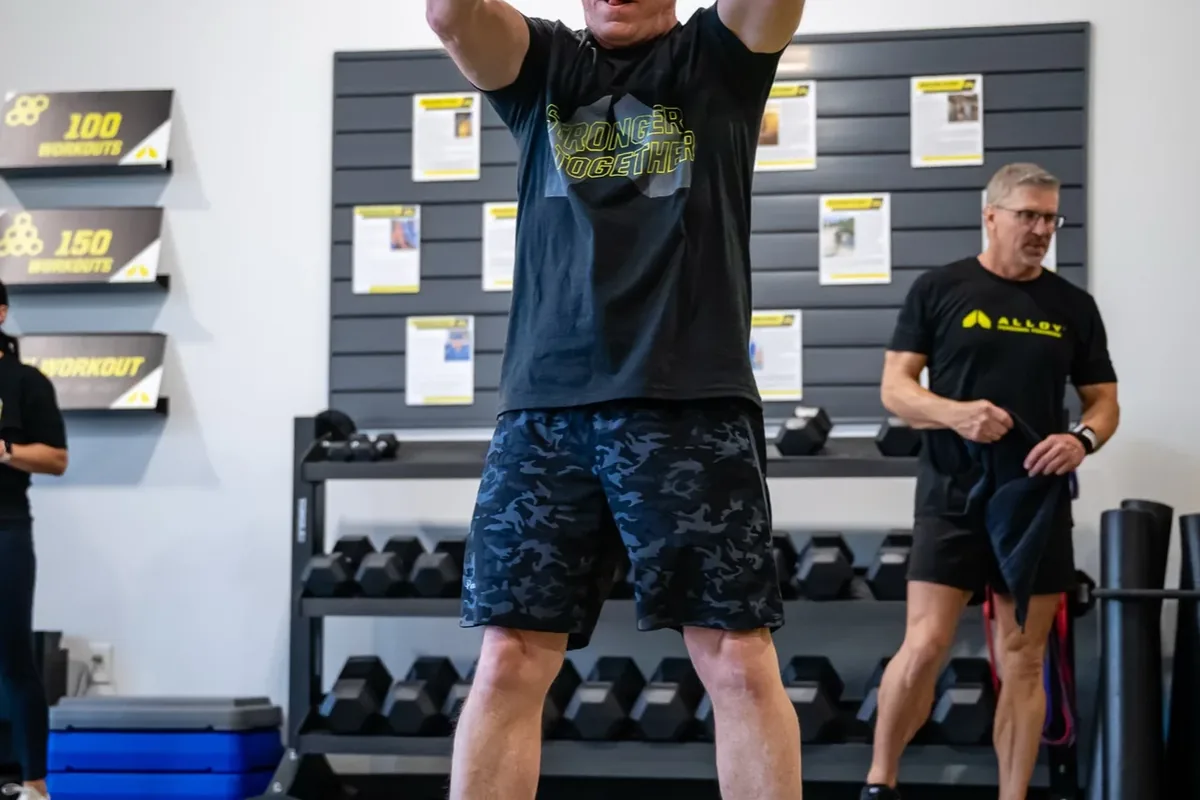
That is the design behind small group personal training at Alloy in Royal Oak: individualized programs, sessions capped at six, and a membership that skews 40 to 65, meaning the person at the next station is on your timeline, not a college kid's.