
Royal Oak is arguably the group fitness capital of Oakland County. Within a few blocks downtown you can cycle, box, do barre, hot yoga, and HIIT. Small group personal training looks like one more option on that list, but it belongs in a different category, and knowing the difference will save you from paying for the wrong tool.
The short version: classes deliver a workout. Small group personal training delivers a program. Which one you need depends on what you are actually trying to change.
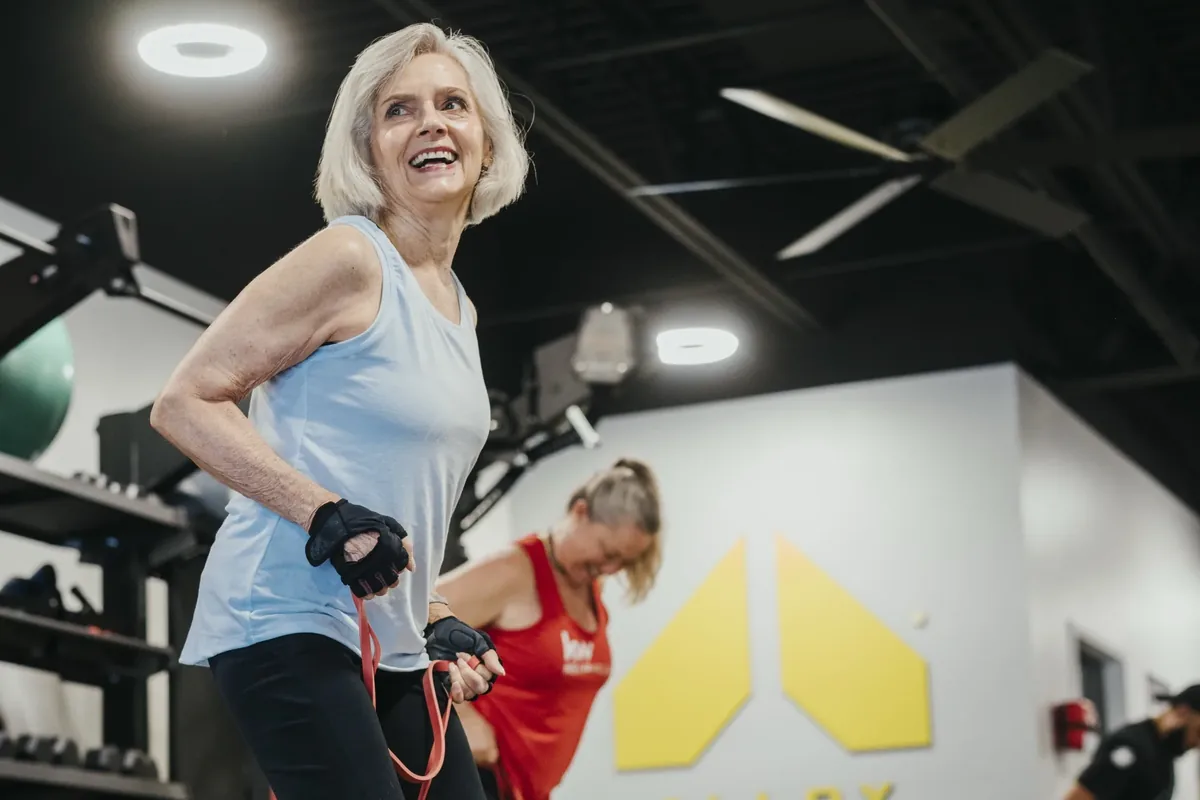
What group classes do well
Classes are excellent at energy, community, and showing up. A instructor-led room with music and momentum makes movement fun, and fun is a legitimate retention strategy. If your goal is general activity and you love the vibe, a class habit is worth keeping.
What classes cannot do is know you. The workout was planned for a room, not a person. Nobody is tracking whether you lifted more than last month, and with 20 or more people moving fast, form correction is a wave of the hand at best.
What small group personal training does differently
At Alloy in Royal Oak, sessions cap at six people and every member runs their own individualized program while the coach manages the room. Three structural differences follow from that:
| Group class | Small group personal training | |
|---|---|---|
| The workout | Same for everyone, changes daily | Yours alone, progresses weekly |
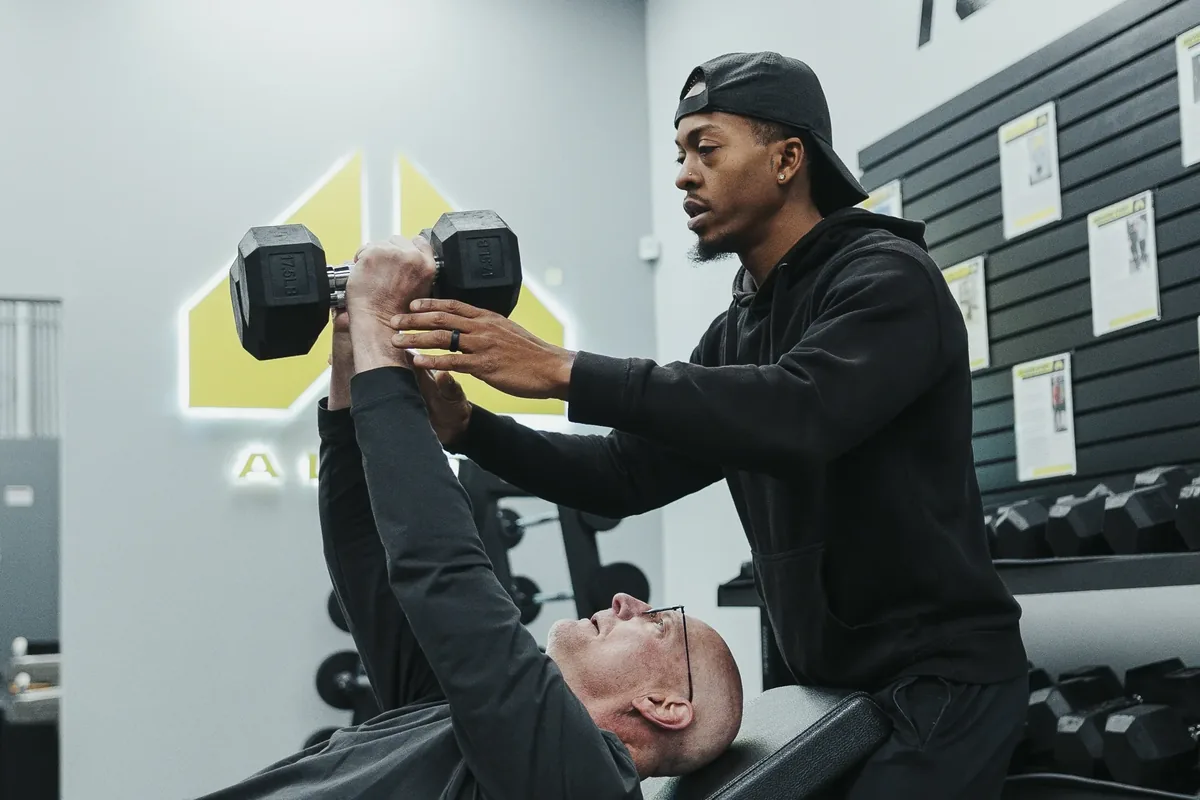
| Coaching | Demonstration from the front | Correction at your station, every session |
| Measurement | How you felt | What you lifted, tracked over time |
The third row is the one that matters. Strength change requires progressive overload, doing measurably more over time, and progression only happens when someone is tracking and planning it. That is the piece a rotating class format structurally cannot provide.
Why this matters more after 40
Two reasons. First, form: joints with mileage punish sloppy technique far more than young ones, and a class instructor cannot watch your deadlift while cueing 24 other people. Second, dosage: the American College of Sports Medicine's guidance for older adults emphasizes progressive, individually scaled resistance training, which is precisely the thing a one-size class cannot scale.
Muscle loss is the backdrop. Adults lose roughly 3 to 8 percent of muscle per decade after 30, accelerating after 60. Reversing that requires structured loading, not just movement.
Can you do both?
Absolutely, and many Royal Oak members do. Two or three coached strength sessions as the foundation, plus a Saturday class downtown for fun. The mistake is not taking classes. The mistake is expecting a class to do a program's job.
How to decide in one minute
Choose classes if you want energy, variety, and a social reason to move, and you have no specific strength or body composition target. Choose small group personal training if you have a goal you intend to measure, a joint history that needs eyes on it, or a pattern of gym memberships that went nowhere without structure.