
"Personal trainer" is a broad title. It covers people with a nationally accredited certification and years of coaching adults, and it covers people who finished a weekend course. From the outside, they can look exactly the same.
After 40, the difference matters more. You might be coming back after a long break, working around a stiff knee or an old shoulder, or newly cleared by your doctor after a stretch of appointments at Corewell Health William Beaumont University Hospital. You need someone who can see how you move and build from there.
Here's what to look for, what to ask, and what should make you walk away.
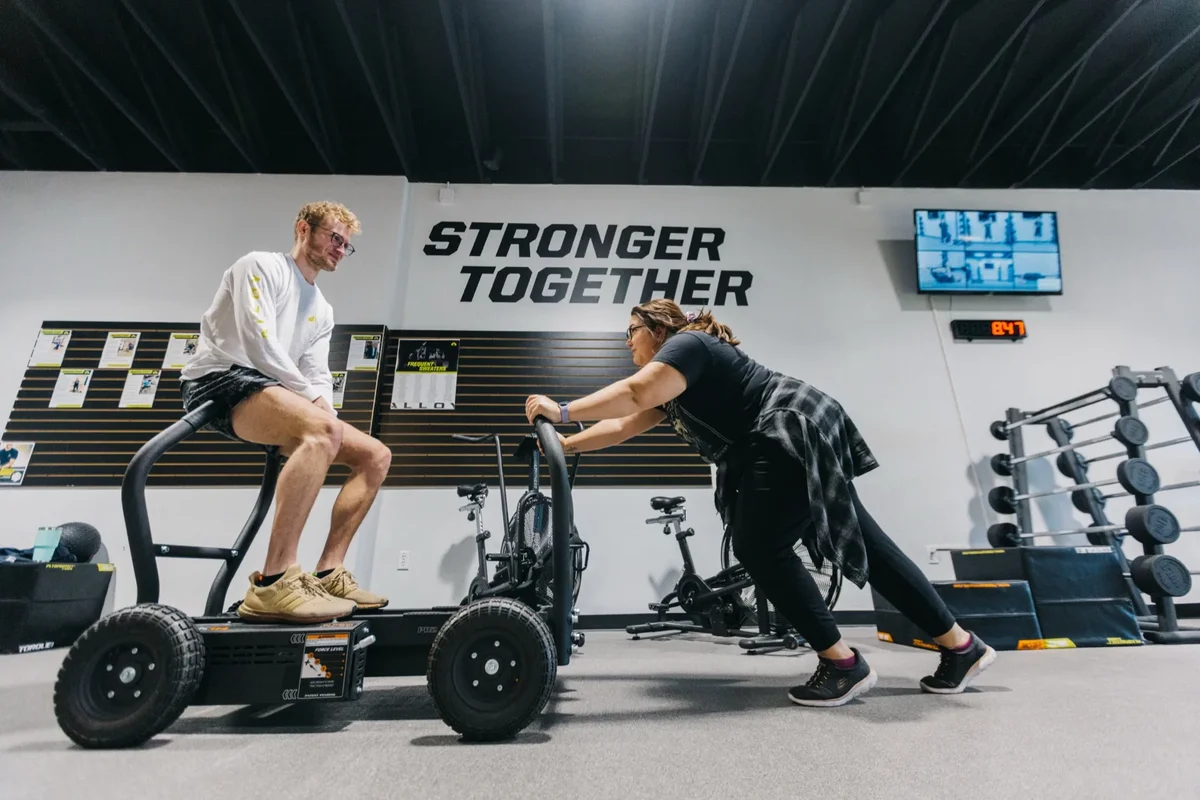
Which certifications actually mean something?
Start with the certification, then check who accredited it. In the US, the main third-party accreditor for trainer credentials is the National Commission for Certifying Agencies (NCCA), which reviews how certification exams are built and run. Three organizations are worth recognizing:
- NSCA (National Strength and Conditioning Association): offers the NSCA-CPT and the CSCS, a strength and conditioning credential. NSCA's 2025 exam report confirms NCCA accreditation for both, and notes that 45,669 professionals held the CSCS at the end of 2025.
- NASM (National Academy of Sports Medicine): its Certified Personal Trainer credential is NCCA-accredited, according to NASM.
- ACSM (American College of Sports Medicine): its Certified Personal Trainer credential is NCCA-accredited, per the US Department of Labor's O*NET certification database.
A certification is a floor, not a ceiling. It shows someone passed an exam on exercise science, program design, and safety. It doesn't show they can coach a 58-year-old with a cranky hip through a split squat. For that, you have to ask questions.
Questions to ask before you commit
A good trainer will welcome these questions:
- What certification do you hold, and who accredits it?
- How much of your coaching is with adults over 40?
- What happens in the first session?
- How do you decide when I'm ready to add weight?
- What do you do when a movement hurts?
- How many people are in a session, and who's watching my form the whole time?
Good answers are specific. "We'll see how you move first, then pick the squat variation that fits your hips" beats "We'll push you hard." Listen for an assessment before any real loading, and for a plan that changes as you get stronger.
Listen for how they treat your goals, too. If you want to stand and walk through the whole Woodward Dream Cruise in August without your back complaining, or do two laps of the roughly 0.8-mile loop at Catalpa Oaks County Park in Southfield, that's a real training goal. A trainer who builds a program around it is paying attention.
Why supervision and form matter more after 40
Without supervision, strength training can go wrong. A study in the American Journal of Sports Medicine estimated that about 970,000 weight-training injuries were treated in US emergency departments from 1990 to 2007, with sprains and strains making up nearly half. The data is older, but the lesson holds: form and supervision matter.
Supervision also changes results, not just safety. In a 12-week trial published in Medicine and Science in Sports and Exercise, moderately trained men who lifted under direct supervision gained significantly more maximal strength than men who ran the same program on their own. The main reason was that their training loads progressed faster.
Red flags worth walking away from
The first session is a hard workout. If nobody asks about your health history, injuries, or past training before handing you a heavy kettlebell, the program isn't built for you.
Everyone gets the same plan. Watch the room. If every client is doing identical sets with identical weights, you're in a class, not personal training.
Pain gets brushed off. "Push through it" is the wrong answer to a sharp pain in your knee. A good coach changes the exercise, adjusts the range, or finds a pain-free version that still does the job.
You feel rushed to sign. A trainer who is confident in their coaching will let you try it first and decide on your own time.
If you're still weighing what kind of place fits you, our honest guide to gyms in Royal Oak walks through the options.
Why an assessment-first trainer is worth finding
The most useful thing a trainer can do on day one is watch you move. A functional movement assessment looks at mobility, muscle imbalances, and limitations before training begins, so the program starts where your body actually is.
That matters for ordinary life goals. If you want to haul a sled up the hill at Normandy Oaks Park with the grandkids this winter, a coach needs to know how your knees and hips handle a step-up before loading one. The assessment answers that, then shapes everything after it.
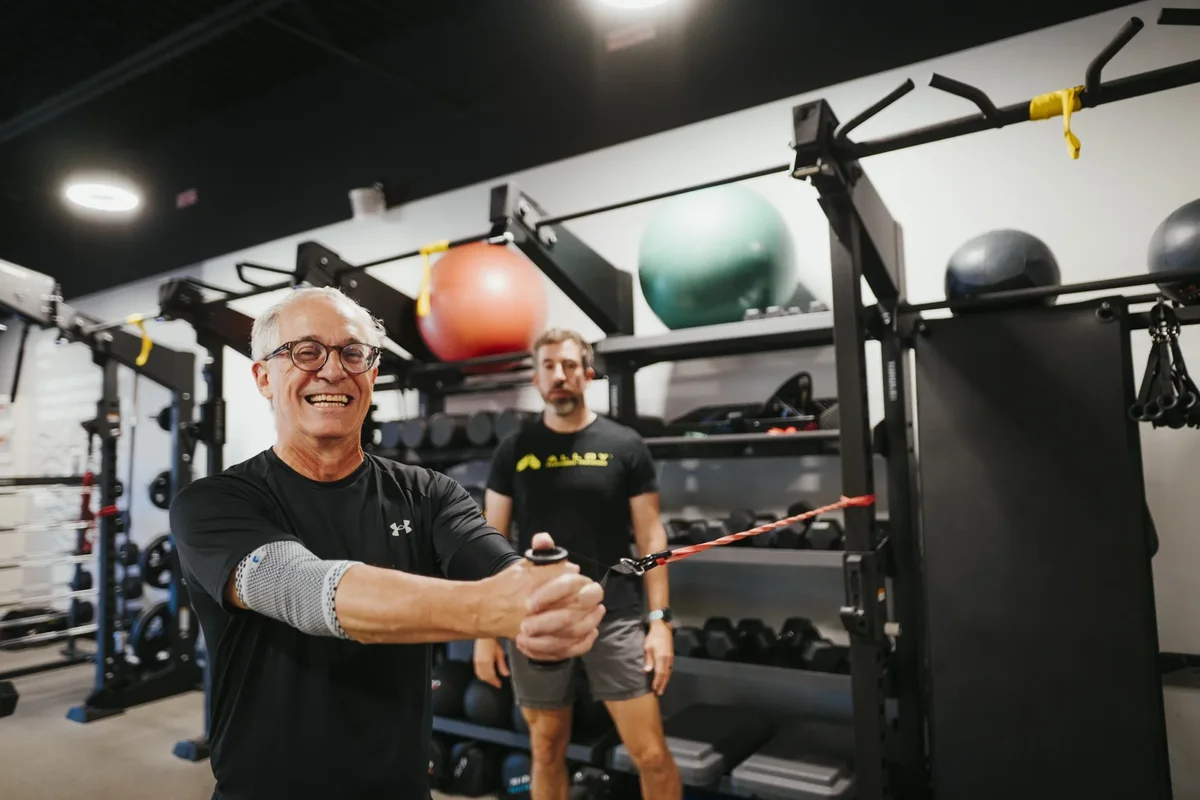
At Alloy Personal Training Royal Oak, our coaches are certified personal trainers, and the coaching team is led by Director of Training Nicole Dobrzeniecki. Every member's program is individualized to their goals, history, and current level, and every small group session is capped at six members and led start to finish by a trainer who adjusts and progresses each exercise.
What should your first step be?
The easiest way to judge a trainer is to watch them work with you. At Alloy Personal Training Royal Oak, your first visit is a Complimentary Session. It starts with a one-on-one conversation with a trainer about your goals, health history, and training experience. Then comes a functional movement assessment, an InBody body composition analysis, and an introductory workout scaled to you. No pressure, no obligation.
For a closer look at that first visit, read what to expect at your first personal training session.
Our studio is on Woodward Avenue, and members come from Royal Oak and nearby Berkley, Clawson, Huntington Woods, Ferndale, Pleasant Ridge, Oak Park, and Birmingham. Book Your Complimentary Session.