
Beginners should use whichever gets them training consistently, and a well-built program usually uses both. Machines are more stable and easier to learn; free weights train balance and real-world movement. The research on muscle and strength gains shows both work when effort and progression are equal, so the machines-versus-free weights war is mostly noise.
That said, the two tools are genuinely different, and knowing what each does well will make your first months of strength training in Royal Oak far more productive.
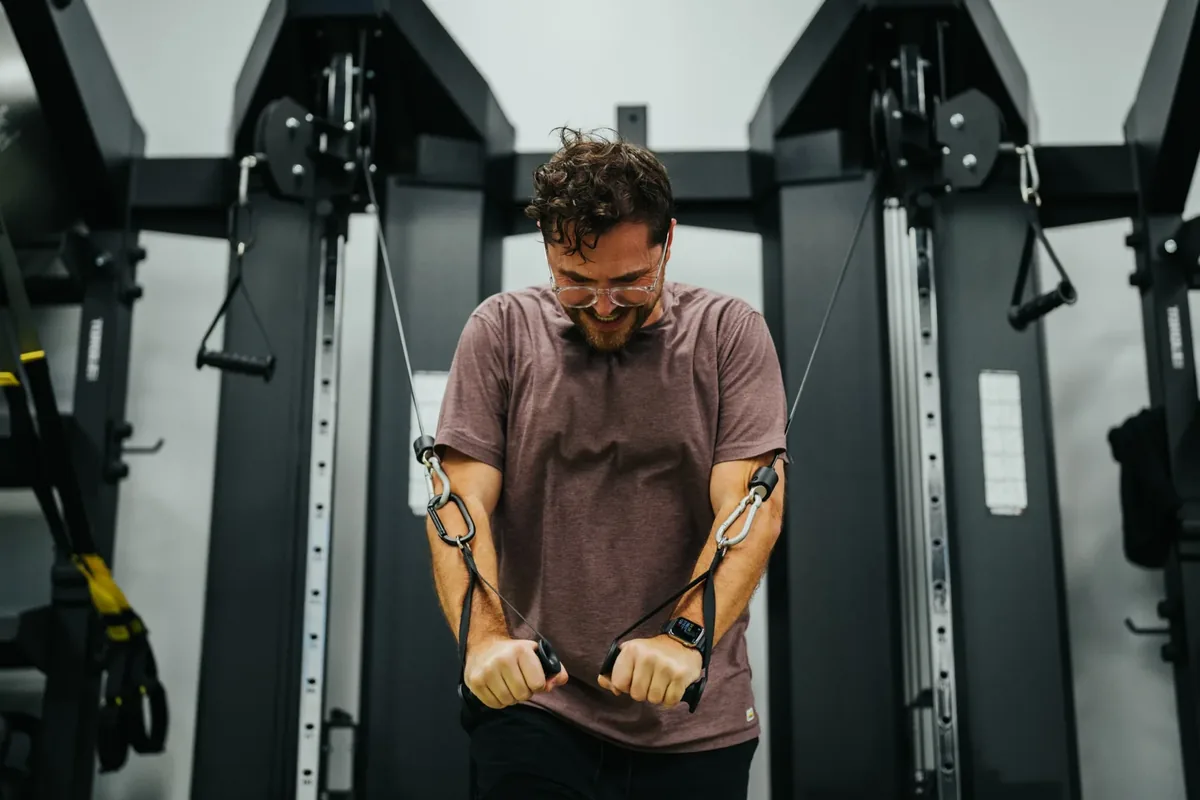
What machines do well
Machines guide the movement path for you, which lowers the learning curve and the intimidation factor at the same time. For a beginner, that means productive training on day one, less worry about dropping something, and a safe way to load a muscle hard once you are stronger.
They are also kind to specific situations: working around an injury, isolating a weak muscle, and training safely to real fatigue without a spotter.
The limitation is the flip side of the guidance. The machine balances the load, so your stabilizing muscles and coordination do less of the work, and machine patterns do not always transfer cleanly to lifting a suitcase or a grandchild.
What free weights do well
Dumbbells, barbells, and kettlebells make you manage the load in space, which is exactly what daily life demands. A goblet squat or a farmer's carry trains your legs, core, grip, and balance as one system. That integration is why coaches lean on free weights for the movements that matter most after 40.
The cost is a real learning curve. Free weight technique deserves teaching, and this is where going it alone gets expensive: form errors that a coach would fix in one session can become ingrained habits, and ingrained errors under increasing load are how backs and shoulders get hurt.
So what should a beginner actually do?
Follow a program that uses machines where stability helps and free weights where transfer matters, with the mix shifting as your skill grows. In practice, that often means machine-supported work early while you learn the five fundamental patterns of squat, hinge, push, pull, and carry with light free weights, then progressively more free weight loading as technique locks in.
That progression is precisely what a coached environment handles for you. At Alloy Personal Training in Royal Oak, every member's program is individualized, so the machine-to-free weight mix reflects your body, your history, and your goals rather than a philosophy.
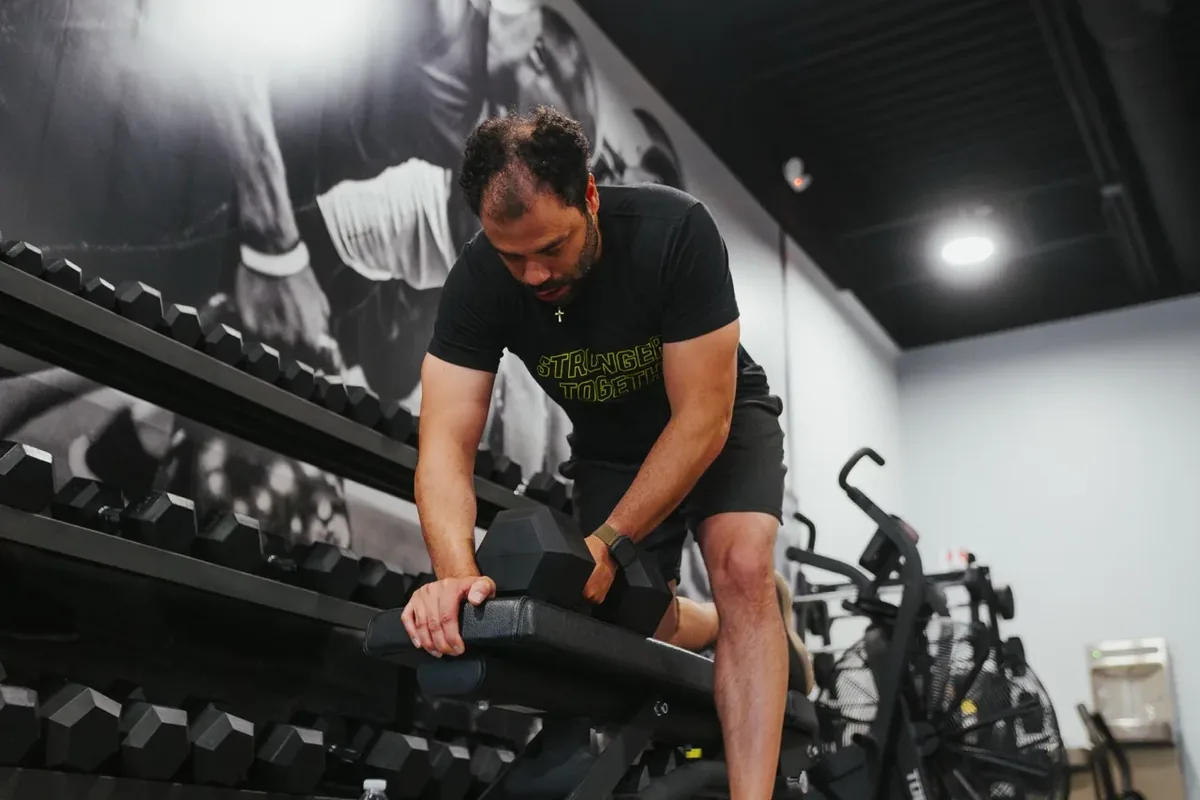
Does the choice matter for people over 40?
The mix matters more, in both directions. Machines earn a bigger early role because they let you load muscle safely while joints and tendons re-adapt to training. Free weights earn a bigger eventual role because balance, coordination, and bone loading are exactly the qualities that protect independence as you age. Skipping either leaves results on the table.
The one thing the research is firm on: whichever tools you use, the load has to progress. The CDC's twice-weekly strength guideline assumes genuine effort, and muscle adapts to challenge, not to equipment brands.