
If you are over 50 and searching for a trainer in Royal Oak, you are not looking for a bootcamp. You are looking for someone who understands a 55-year-old shoulder, respects what your knees have been through, and can still get you meaningfully stronger. That combination is a specialty, and it happens to be the one our studio is built around.
This guide covers what actually changes after 50, what a well-designed program looks like, and how to evaluate any trainer you are considering, including us.
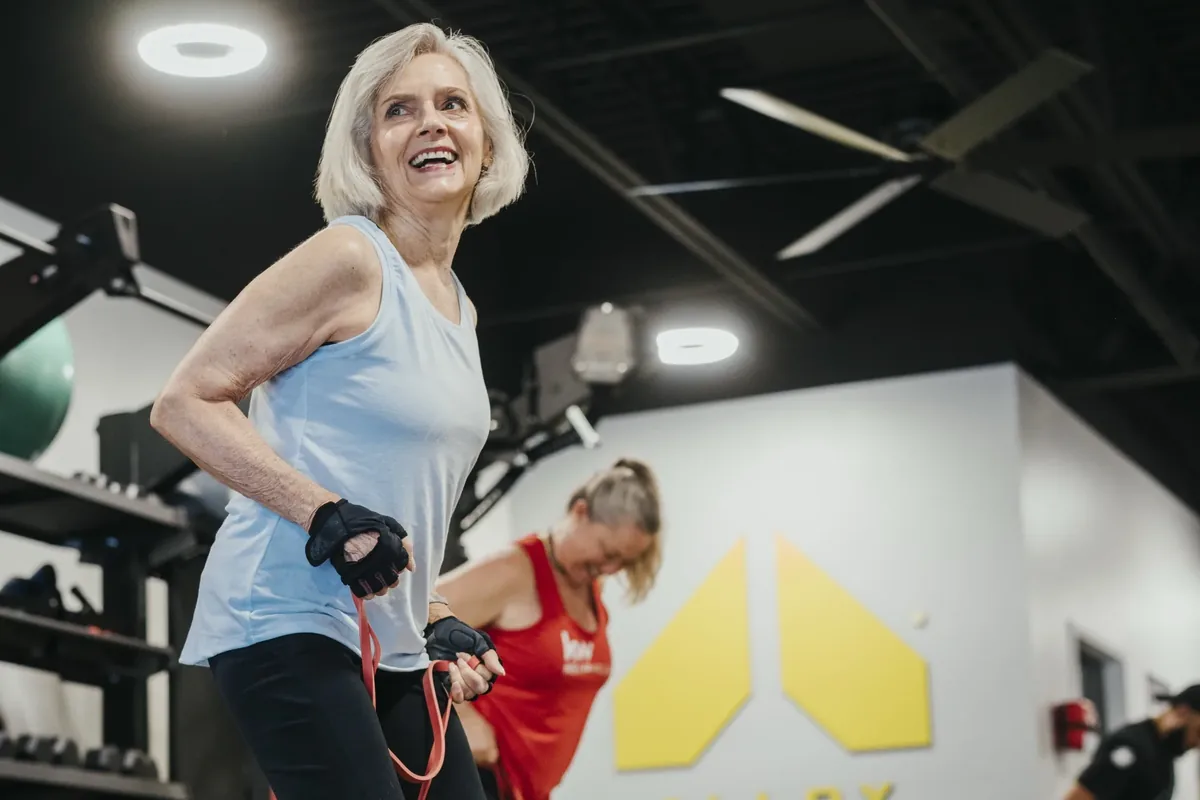
Why does training after 50 need a different approach?
Because the stakes and the physiology both shift. Adults lose roughly 3 to 8 percent of muscle per decade after 30, and the loss accelerates past 60. Bone density follows, particularly for women after menopause, and recovery between hard sessions takes longer than it did at 35.
None of that means training gets gentler. It means training gets smarter: more attention to technique, more deliberate progression, more respect for recovery. The load still has to challenge you, because challenge is what tells muscle and bone to adapt. The evidence on this is unambiguous, going back to landmark Tufts University research showing dramatic strength gains from supervised resistance training even in people in their 80s and 90s.
What should a program for a 50-something include?
Two to three coached strength sessions per week built on the fundamental movement patterns: squat, hinge, push, pull, carry. That matches the CDC's guidance of at least two weekly strength sessions for all adults, and guidance from the American College of Sports Medicine that emphasizes progressive, supervised resistance work for older adults.
Just as important is what it should not include: random high-intensity circuits, exercises that ignore your injury history, or a program identical to the 30-year-old's next to you.
At Alloy in Royal Oak, every program starts from an assessment, so your cranky shoulder and your goals are both in the plan from day one.
Is it safe to start strength training at 55 or 60?
For the vast majority of people, yes, and it is considerably safer than staying sedentary. Supervised resistance training has a lower injury rate than most recreational sports, and it directly reduces the risks that matter most after 50: falls, fractures, and the slow loss of independence.
If you have a diagnosed condition such as osteoporosis or heart disease, check with your doctor first. The typical outcome of that conversation is not "don't train." It is "train, carefully," which is what coaching is for.
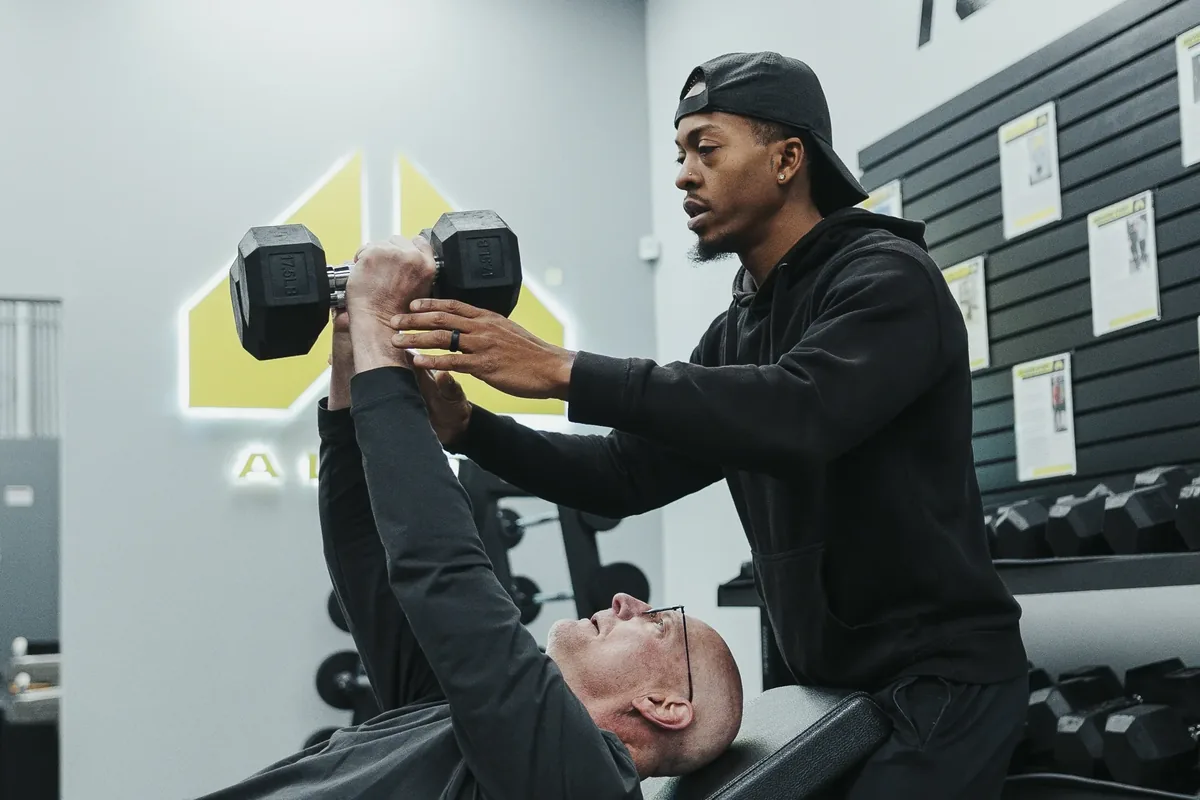
What results are realistic after 50?
Strength gains of 25 percent or more within a few months are common for beginners over 50 in the research, and our members' experience matches it. In everyday terms: stairs stop being a calculation, grandchildren get picked up without bracing, luggage goes in the overhead bin.
What you will not get is a dramatic transformation in three weeks, from us or anyone honest. Strength after 50 is compound interest. The deposits are unglamorous; the balance changes your next twenty years.