
Strength training is the closest thing midlife has to a master key. It rebuilds muscle you have been losing since your 30s, protects bone, improves blood sugar and blood pressure, and is the difference between aging into your 70s capable or fragile. And in Royal Oak you have no shortage of places to do it, which is exactly why it helps to understand what beginners actually need.
This guide covers the what, how often, and where to start, written for adults over 40 rather than 22-year-olds chasing a pump.

What is strength training, practically speaking?
Any training where muscles work against meaningful resistance: barbells, dumbbells, machines, cables, or your own bodyweight when it is genuinely challenging. What qualifies is effort and progression, not equipment. If the resistance never increases, it is movement, which is fine, but it is not strength training.
For beginners, the entire foundation is five patterns: squat, hinge, push, pull, and carry. Every gym in Oakland County is full of equipment that expresses those five ideas.
How often, and how heavy?
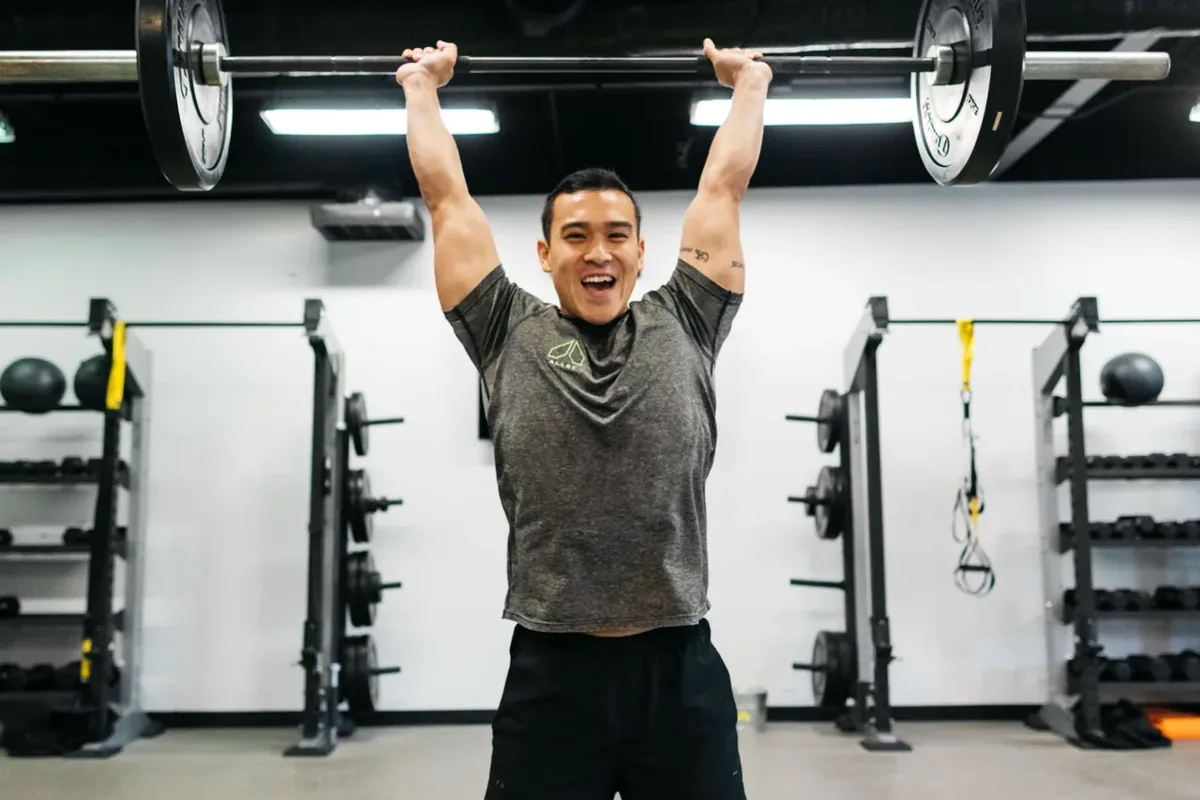
Twice per week minimum, per CDC guidelines, and two to three sessions is the practical sweet spot for adults over 40. Each session can be 45 to 60 minutes. As for weight: heavy enough that the last couple of repetitions require focus, light enough that your form does not bend. A coach's job is finding that line for you; alone, beginners almost always guess low or, worse, high.
Progress comes from small planned increases over weeks, a principle called progressive overload. It is boring, and it is the entire secret.
Can I just learn from YouTube and train at a big gym?
You can, and some people manage it. The honest failure points are the ones you cannot see yourself: form drift under fatigue, progression that stalls or spikes, and nobody noticing when you stop coming. Research comparing supervised with unsupervised training keeps landing the same way, with supervised lifters gaining strength significantly faster.
The middle path many Royal Oak adults pick is small group personal training: an individualized program and a coach watching your lifts, in a six-person session that costs a fraction of private training. That is the format we run at Alloy on Woodward Avenue.
What should the first three months look like?
- Month 1: Learn. All five patterns at conservative weights, twice or three times weekly. The habit is the win; strength is the byproduct.
- Month 2: Load. Weights climb steadily, movements feel natural, everyday tasks get noticeably easier.
- Month 3: Measure. Strength up substantially from baseline, posture visibly different, and, for most people, the first comments from family and coworkers.
None of that requires soreness, exhaustion, or heroics. It requires attendance and progression, in that order.
What about cardio?
Keep it, but understand its lane. Walking, cycling the neighborhood, and the treadmill serve your heart and your recovery. They do not stop muscle and bone loss, because they do not load tissue hard enough to force adaptation. After 40 the evidence points to a simple pairing: strength training as the foundation, easy cardio as the complement, not the reverse.